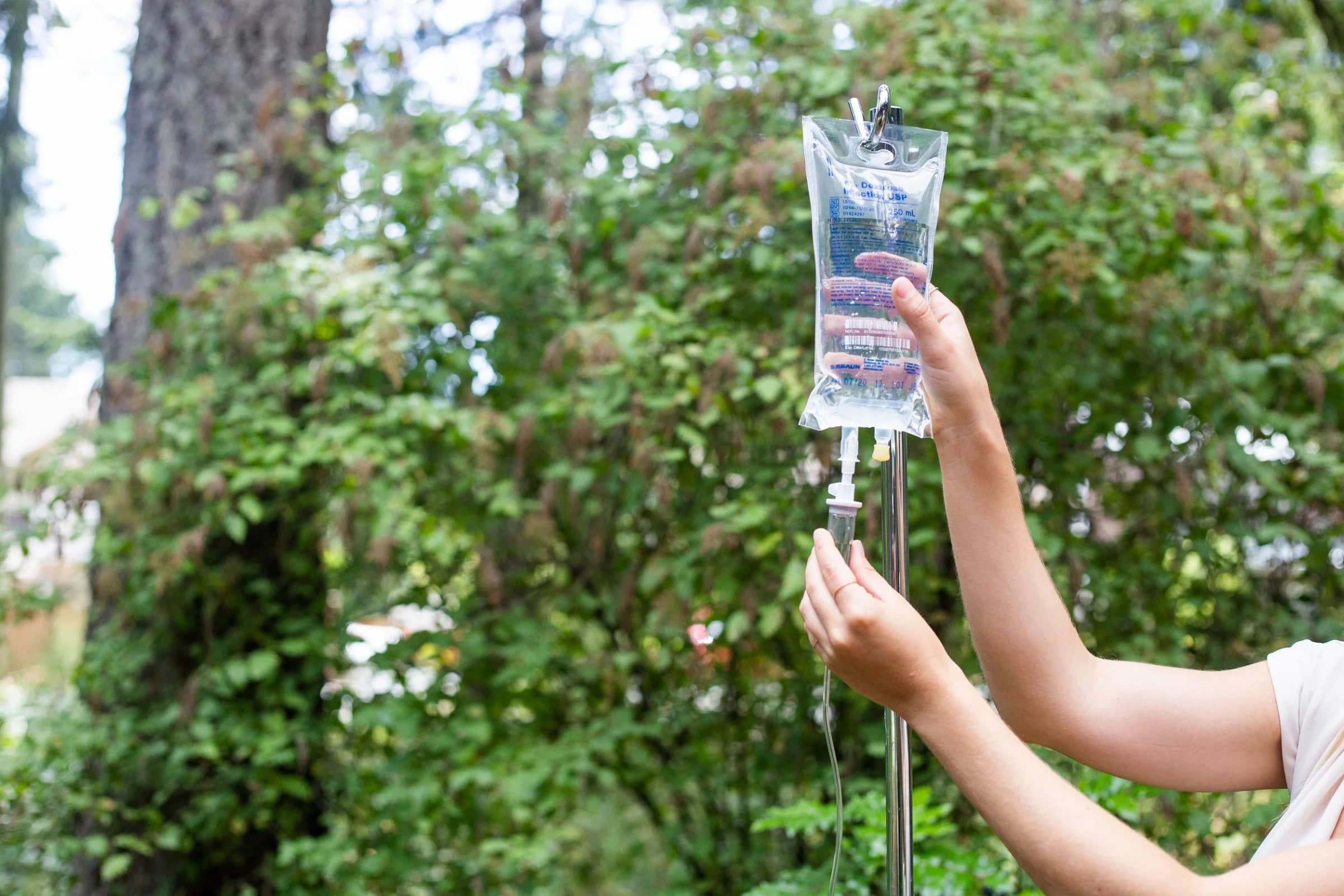
Intravenous (IV) therapy delivers fluids, vitamins and minerals directly into a vein, so they enter your bloodstream without passing through the digestive tract. It has moved from hospitals into wellness clinics over the last decade, and it tends to raise the same handful of questions: what is in the bag, what can it help with, and is it right for me. Here is a straight answer to each.
What Is IV Therapy?
An IV drip is a small tube placed into a vein in your arm, connected to a bag of sterile fluid. Depending on the formula, that fluid can carry saline for hydration, B vitamins, vitamin C, magnesium, or other nutrients. Because it bypasses the gut, more of what is in the bag reaches your bloodstream than would from a pill, and it arrives faster.
That's the real difference between an IV and a supplement: absorption. Some people don't absorb certain nutrients well through the gut, whether from a digestive condition, a deficiency, or the limits of how much the body takes up orally at one time. For them, an IV can be a more direct route. A session usually takes 30 to 60 minutes, and you sit comfortably the whole time.
What Can IV Therapy Help With?
The honest answer is that it depends on the person and the formula, and the evidence is stronger for some uses than others. IV fluids are well established for rehydration. Nutrient IVs are used to support people who are run down, recovering from illness, or dealing with a diagnosed deficiency. Many patients come in around fatigue that has not lifted with rest, and an assessment is how we work out whether an IV is a sensible part of the picture or whether something else is driving it.
What IV therapy is not is a cure for a disease, and it is not a substitute for a diagnosis. If your energy has been low for months, the useful first step is finding out why. That's why our IV work sits alongside naturopathic care rather than standing on its own: the drip is a tool, and it works best when it's chosen for a reason.
Who Is a Good Candidate?
IV therapy suits some people and not others, and that's worth sorting out before you book a drip. A brief health review comes first, because IVs are not appropriate for everyone, certain heart, kidney and other conditions change what is safe. We check that before anything goes in the bag.
If you're generally well and curious about hydration or a vitamin boost, that's a reasonable conversation to have. If you're managing a specific concern, the better starting point is an assessment so the formula, if any, is matched to what your body needs.
What Happens at Your First Visit?
Your first appointment begins with a health history and a look at what you're hoping to address. We talk through whether IV therapy fits, which formula makes sense, and any reasons it might not be right for you. If we proceed, the drip itself is straightforward: a small pinch as the line goes in, then you relax while it runs.
You don't need a referral to be seen. If you would like help deciding where to start, our new patient page walks through how a first visit works, and you can book an appointment online whenever you're ready.