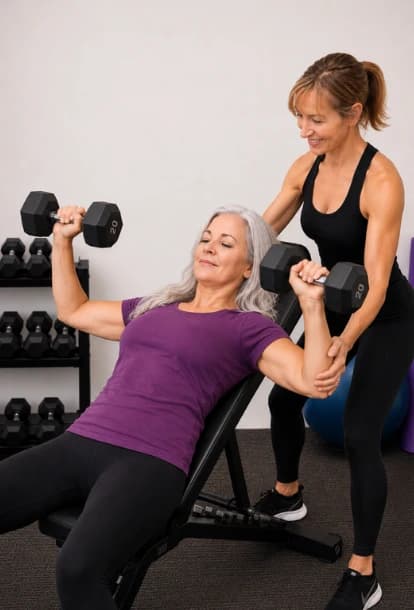
Personal Training in Burlington
One-on-one coaching built around your goals, your body, and where you are starting from today.
- 1-on-1
- Private coaching, not group classes
- Multi-disciplinary
- Trainers alongside our clinical team
- Appleby Line
- On-site parking in Burlington
What Personal Training Is and Who It Is For
Personal training here is private, one-on-one coaching designed around a single goal: helping you move well and get stronger in a way that fits your life. Your trainer looks at your current fitness level, your history, and what you want to be able to do, then builds the plan from there.
It suits a range of people. If you're new to exercise and unsure where to start, sessions give you structure and someone watching your form. If you're coming back after an injury, training can pick up where rehabilitation left off, often alongside osteopathy or clinical care when that makes sense. If you already train and want to work toward a performance goal or hold onto strength as you age, the coaching sharpens what you're doing.
What Personal Training Can Help With
- Building Strength from a Beginner Level
- Returning to Exercise After Injury
- Improving Mobility and Range of Movement
- Supporting Recovery Between Clinical Visits
- Working Toward a Performance or Event Goal
- Maintaining Strength and Function with Age
What a Personal Training Session Looks Like
Your first session is longer, because it doubles as a starting assessment. After that, sessions settle into a rhythm your trainer adjusts as you progress.
- 01
The Starting Assessment
Your trainer talks through your goals, past injuries, and current activity, then watches how you move through some basic patterns. This sets the baseline everything else is built on. - 02
Your First Working Sessions
Early sessions focus on movement quality and building a foundation. Expect coaching on form, plenty of feedback, and loads matched to where you are, not where you think you should be. - 03
Progressing Over Time
As strength and mobility improve, your trainer raises the challenge and reshapes the plan. Wear comfortable clothing you can move in and bring water. Some muscle soreness in the day or two after is normal early on.
What Personal Training Costs and What Covers It
Session fees are shared before you book, so there are no surprises. You can ask us for the current rate by phone or when you come in.
Personal training isn't typically covered by extended health insurance the way registered services are, since a trainer isn't a regulated health professional. Some workplace wellness accounts or health spending accounts do reimburse it, so it's worth checking your own plan. If you're coming to us after an injury and want your care to connect with a regulated practitioner, we can talk through how training fits alongside services that may be claimable.

Why Train at Balance Integrative Health in Burlington
Training here sits inside a clinic, not a gym floor. That means if something flares up or your body needs a second set of eyes, there are practitioners in the building, and your trainer can coordinate with them rather than sending you off to find help elsewhere.
The clinic is on Appleby Line in Burlington with parking on site, which makes it straightforward for people coming in from Oakville, Waterdown, and the surrounding area. If you're weighing whether training or a clinical approach fits your situation better, our team can help you sort that out. You can read more about how we work before you decide.
Common Questions About Personal Training
Do I need to be fit before I start?
How often should I train to see a difference?
Can I train if I am recovering from an injury?
What should I bring to my first session?
Book Personal Training in Burlington
Tell us your goal and we'll match you with a trainer and set up a first session. It starts with an honest look at where you are now.